Exploring Roma history, minority narratives and cultural memory in Bucharest
From 20 to 24 June 2026, the NARDIV Summer School 2026 turns the Goethe Pavilion Bucharest into a space for research, artistic practice and public dialogue on minority narratives, Roma history and cultural memory in Europe.
Under the title “Untold Stories”, the Summer School focuses on histories and perspectives that have too often remained marginalised in European public debate. Taking Romania and the Roma minority as a central point of departure, the programme asks how cultural narratives are formed, who gets to tell them, and how research, education and artistic practice can contribute to a more inclusive understanding of Europe.
Hosted at the Goethe Pavilion Bucharest, the Summer School combines academic exchange, guided visits, student contributions, workshops, public talks and community-based formats. Over five days, participants will engage with Roma history in Romania, explore minority cultures and multilingual memory spaces, visit archives and museums, and develop recommendations for future cultural and educational policy.
The Summer School is part of NARDIV – United in Narrative Diversity?, a Horizon Europe project funded by the European Union. NARDIV explores how diverse stories, life experiences and cultural perspectives can challenge stereotypes, strengthen dialogue across Europe, and contribute to more inclusive forms of cultural diplomacy.
Programme focus
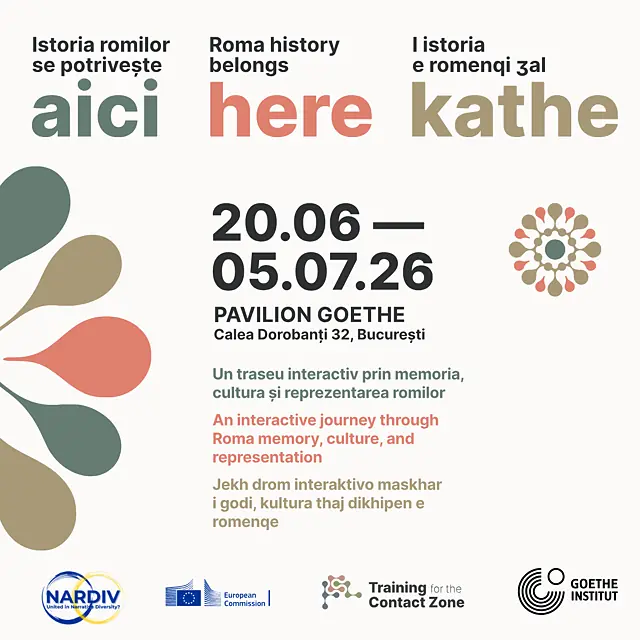
The Summer School opens on Saturday, 20 June, with the vernissage of the exhibition “Roma history belongs here / I istoria e romenqi ʒal kathe” at the Goethe Pavilion. The exhibition creates an interactive journey through Roma memory, culture and representation, combining photography, archival material, video interviews, participatory installations and educational resources.
On Sunday, 21 June, participants begin the academic programme with an introduction to the week and student contributions on minority narratives. The following days combine lectures, workshops and field-based formats, including a sound walk, a guided visit to the Peasant Museum Archive, sessions on Roma history in Romania, artistic research, student-led presentations and working groups dedicated to formulating recommendations.
The programme is designed to move beyond observation. Participants are invited to connect research with practice, cultural memory with lived experience, and historical reflection with concrete ideas for policy and education.
Public NARDIV Talks
Alongside the Summer School programme, three public evening events open the discussion to a wider audience.
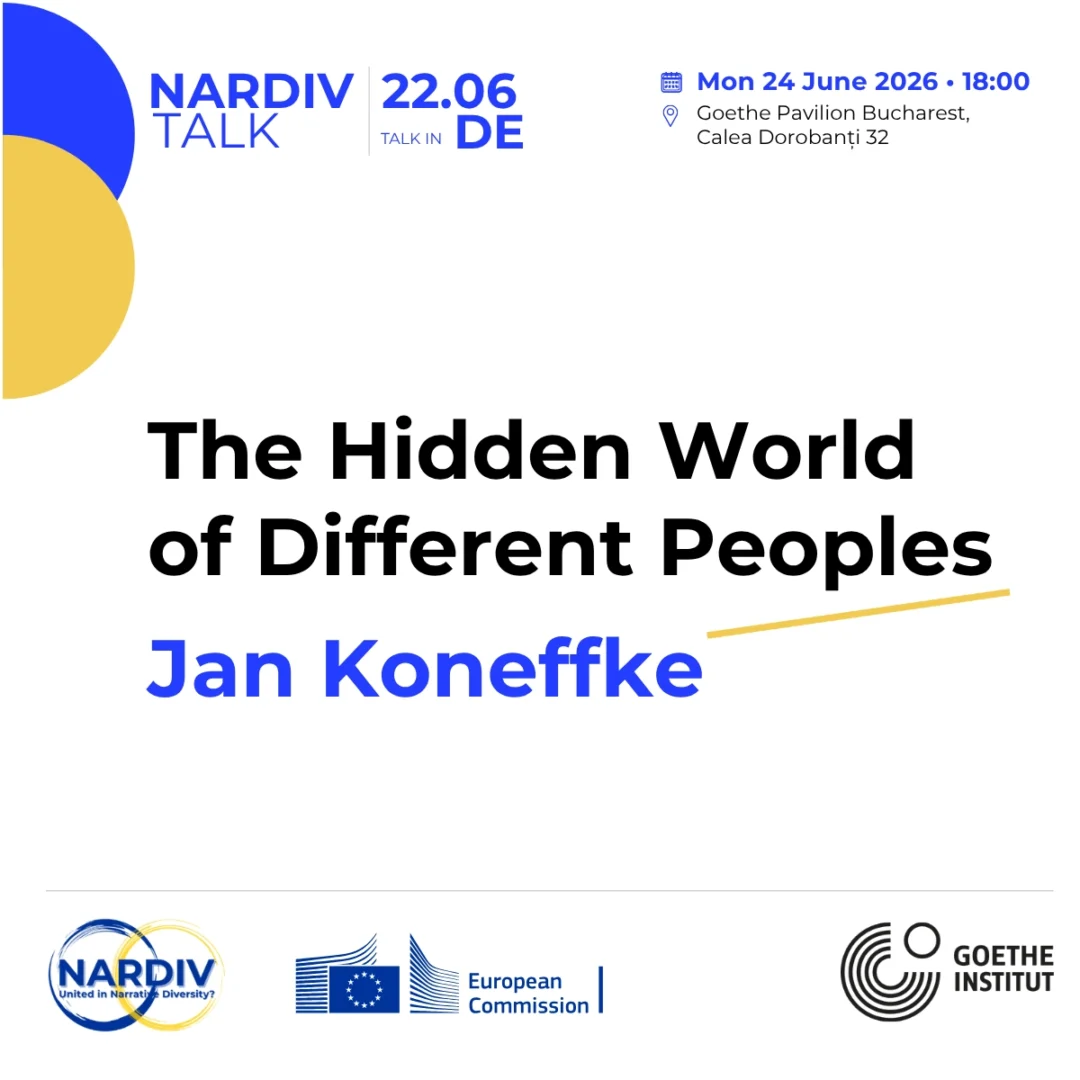
The Hidden World of Different Peoples
Monday, 22 June, 18:00
Goethe Pavilion Bucharest, Calea Dorobanți 32
Language: German
Writer Jan Koneffke explores two lesser-known cultural worlds shaped by coexistence, migration and refuge along the Danube. The talk first turns to the Danube Delta as a sanctuary for Russian Old Believers, before reflecting on Sulina as a multi-ethnic port and a historical space of encounter through Jean Bart’s novel Europolis.
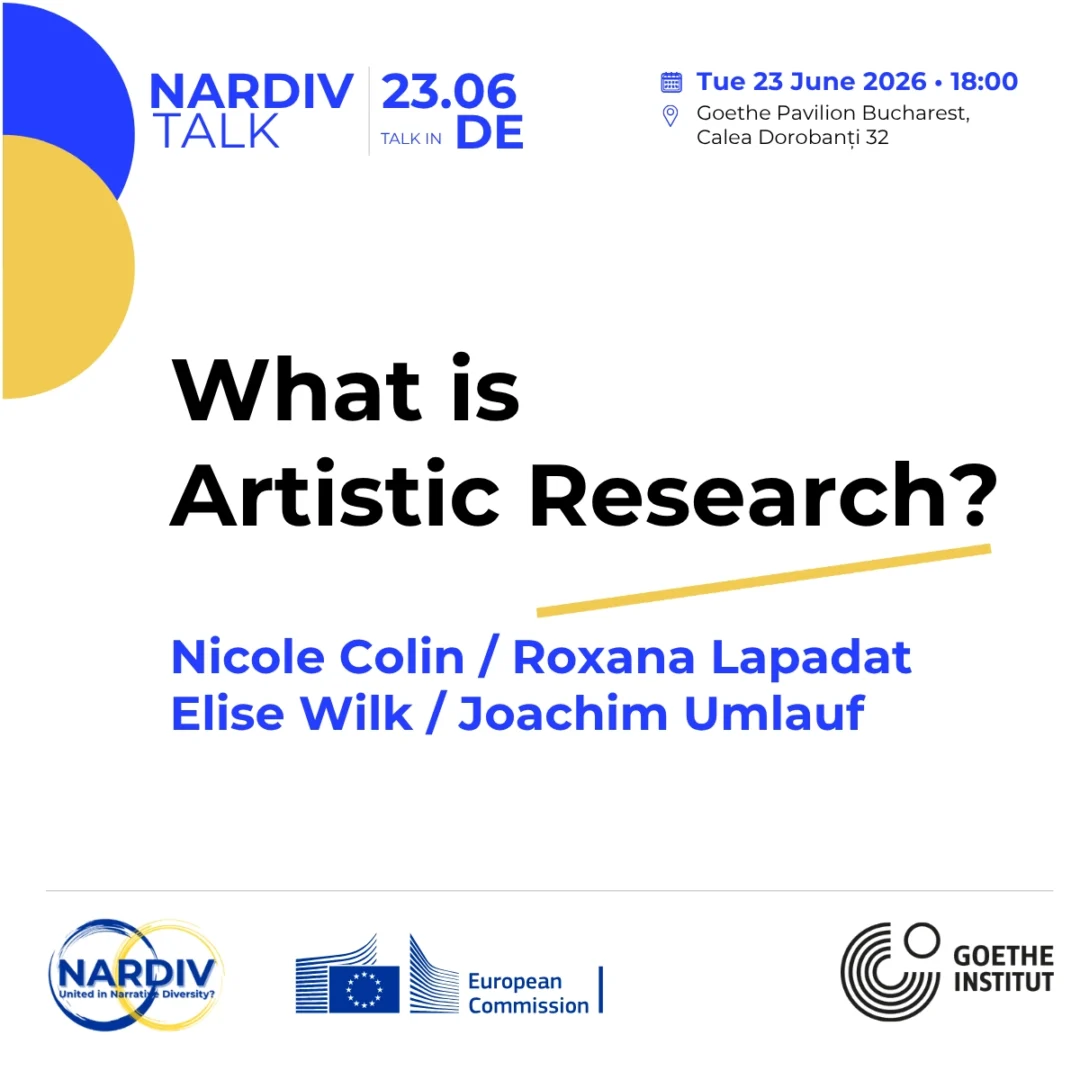
What is Artistic Research?
Tuesday, 23 June, 18:00
Goethe Pavilion Bucharest, Calea Dorobanți 32
Language: German
This discussion examines artistic research as a form of knowledge production and as a tool for engaging with minority experiences. With Roxana Lăpădat, Nicole Colin, Elise Wilk and moderator Joachim Umlauf, the event asks what artistic and scientific methods can achieve together — and how they can foster empathy, participation and social cohesion.
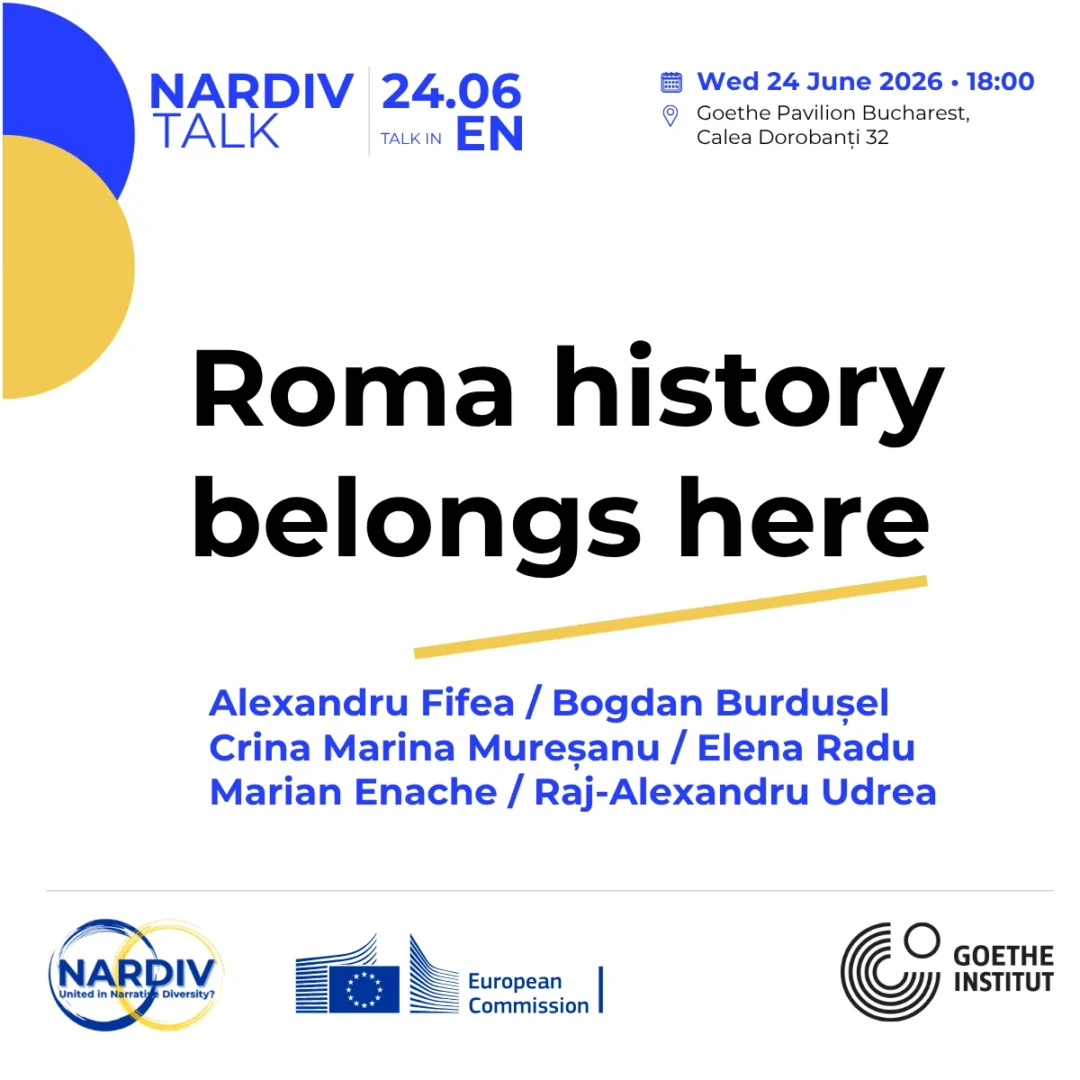
Roma history belongs here
Wednesday, 24 June, 18:00
Goethe Pavilion Bucharest, Calea Dorobanți 32
Language: English
As part of the NARDIV exhibition, this panel brings together activists, artists and educators whose portraits and interviews are featured in the exhibition. Alexandru Fifea, Bogdan Burdușel, Crina Marina Mureșanu, Elena Radu, Marian Enache and Raj-Alexandru Udrea will discuss how culture, education, civic engagement and artistic practice can contribute to Roma empowerment, self-representation and social inclusion in Romania and beyond.
The panel is conceived as more than a public conversation. It aims to translate lived experience and professional expertise into actionable insights for European cultural and educational policy.
The NARDIV Summer School addresses a central challenge for Europe: how to create spaces in which marginalised histories are not treated as peripheral, but understood as part of Europe’s shared cultural and political present.
By focusing on Roma history and minority narratives in Romania, the programme opens a broader conversation about representation, cultural democracy and the role of education in building more inclusive societies. It brings academic research into dialogue with artistic practice, community knowledge and public engagement.
Practical information
NARDIV Summer School 2026: Untold Stories
20–24 June 2026
Goethe Pavilion Bucharest
Calea Dorobanți 32, Bucharest
The programme includes internal Summer School sessions for participants as well as public evening events. Public talks take place on 22, 23 and 24 June at 18:00 at the Goethe Pavilion Bucharest.
Funded by the European Union. Views and opinions expressed are however those of the author(s) only and do not necessarily reflect those of the European Union or the European Research Executive Agency. Neither the European Union nor the granting authority can be held responsible for them.